The year 1994 was a watershed moment for home entertainment, marking the birth of the Sony PlayStation (PS1) and redefining the gaming landscape forever. From the high-octane races of Gran Turismo to the survival horror of Resident Evil, the original gray console became a symbol of Japanese innovation and creative monozukuri—the art of making things with care and soul. Today, that legacy is immortalized in a way that fits right in your bag: the PlayStation Multi-Case, a perfect blend of retro charm and modern utility.
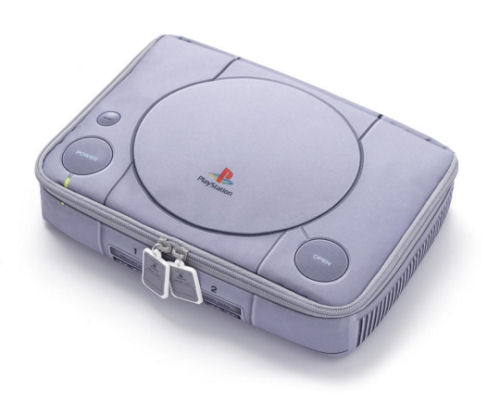
In Japan, there is a long-standing tradition of taking beloved technology and reimagining it as functional lifestyle accessories. This zakka culture focuses on items that improve your daily life while expressing your personality. The PlayStation Multi-Case solves the age-old problem of messy bags and disorganized tech gear. Instead of hunting for charging cables or stationery in the dark corners of your backpack, this case provides a dedicated, stylish home for your essentials, all while celebrating the console that started it all.
The attention to detail in this product is truly remarkable and reflects the playful quirks of Japanese design. While it won’t actually boot up a disc, the PlayStation Multi-Case features zipper pullers shaped exactly like original PS1 memory cartridges. The exterior is a faithful recreation of the console’s iconic gray chassis, measuring approximately 8.5 x 26.5 x 5 cm (3.4 x 10.4 x 2 inches). Open it up, and you are greeted by a high-quality lining featuring the classic PlayStation logo, alongside a zippered mesh pocket to keep smaller items secure.
Whether you are using it as a sleek pencil case, a makeup kit, or a travel pouch for your modern handheld electronics, this case is a conversation starter. It even comes with a special 8-page A4-size booklet in Japanese, offering a deep dive into the history and aesthetic that made the PS1 a global phenomenon. For those looking to carry a piece of gaming history with them, you can find the PlayStation Multi-Case right here. It is a wonderful example of how Japanese design can turn a memory into a functional masterpiece.