When you think of Japanese sweets, dango is likely the first treat that comes to mind. These chewy rice flour balls are a staple of Japanese confectionery, appearing in various flavors and colors across the seasons. However, there is a specific, more somber version known as osonae dango. These white, pyramid-stacked dango are traditionally used as offerings during Buddhist services or the Obon festival in August. The Kameyama Dango Sweets Offering Candle captures this cultural tradition perfectly, offering a beautiful and symbolic way to honor ancestors without the worry of fresh food spoiling.
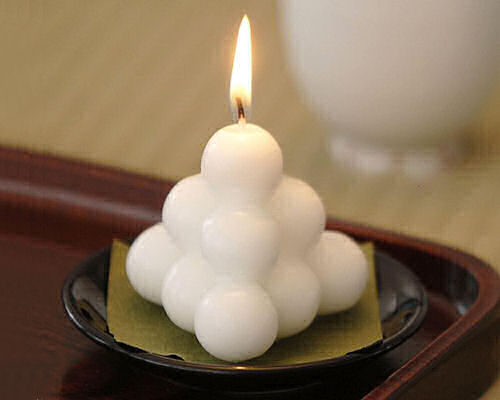
One of the most fascinating aspects of Japanese design is the dedication to realism and ‘trompe l’oeil’ aesthetics. At first glance, you might be tempted to reach out and take a bite! This candle solves a practical problem: real rice cakes can harden or attract pests when left out on an altar for several days. By using high-quality paraffin wax, Kameyama has created a replica that maintains its pristine, white appearance indefinitely. It embodies the Japanese philosophy of functional beauty, where even a religious offering is crafted with meticulous attention to detail and a touch of playful innovation.
The design features a heap of dango ball-shaped candles measuring 100 x 67 mm (3.9 x 2.6 inches), resting on a traditional black serving plate with green serving paper. This attention to the ‘presentation’ is a hallmark of Japanese hospitality, or omotenashi, extending even to the spiritual world. Weighing in at 118g, the set is unscented, ensuring it doesn’t interfere with the fragrance of incense during a ceremony. You can find this unique piece of Japanese craftsmanship at the Japan Trend Shop.
Whether you are looking for an authentic item for a Buddhist altar or simply want a quirky, conversation-starting piece of home decor, this candle is a perfect choice. While it is a fully functional candle, many find it a shame to actually light the wick because the sculpture itself is so charming. It is a wonderful example of how modern innovation can breathe new life into ancient customs, making tradition accessible and practical for the modern home.